Free Schooling Vision is Not a Fiscal Trap

- Created Oct 01 2026
- / 82 Read
Free Schooling Vision is Not a Fiscal Trap

Reports regarding Indonesia's plan to realize free public education are often overshadowed by narratives of fiscal anxiety. One emerging discourse, as highlighted by the South China Morning Post under the headline "Indonesia targets free public schooling amid funding concerns," frames this policy in pessimism. Such narratives generally stem from the perspective of fiscal conservatism, which views social policies purely as a cost rather than a strategic human capital investment.
While critiques regarding budget capacity are a necessity in public policy analysis, views that focus solely on deficits and "funding concerns" often miss the big picture. The free education policy is not a populist utopia; it is a structural prerequisite for a country racing against time toward the tipping point of the 2045 Demographic Dividend projections.
Therefore, to provide a more comprehensive horizon, we need to untangle three main highlights from these pessimistic narratives and interpret them more wisely with data and proportional alternative perspectives.
1. Media Highlight: The Threat of Fiscal Burden and Budget Deficits
The free schooling policy is perceived as something that will drain the State Budget (APBN), especially when faced with other national programs (such as free nutritious meals), thereby threatening macroeconomic stability and widening the fiscal deficit.
This concern ignores the fact that the Indonesian constitution has mandated a 20% mandatory spending allocation from the APBN for education. In 2024, the education budget reached more than Rp 708 trillion and is projected to continue increasing in line with economic growth. The real issue is not a "lack of money," but rather the efficiency and convergence of allocations across ministries and regional governments (Transfers to Regions/TKDD).
Furthermore, Indonesia's debt-to-GDP ratio currently stands at around 39%, one of the most prudent among G20 nations. Financing public education should not be seen as a futile ballooning of debt, but rather as the recapitalization of the future economy. World Bank studies consistently show that every additional year of schooling in developing countries can increase an individual's future income by 9-10%, which in turn will expand the country's own tax base (Return on Investment).
2. Media Highlight: Educational Quantity vs. Quality
Expanding (free) access is assumed to sacrifice educational quality, suppress teacher welfare, and result in inadequate facilities because the budget is forced to cover too many students.
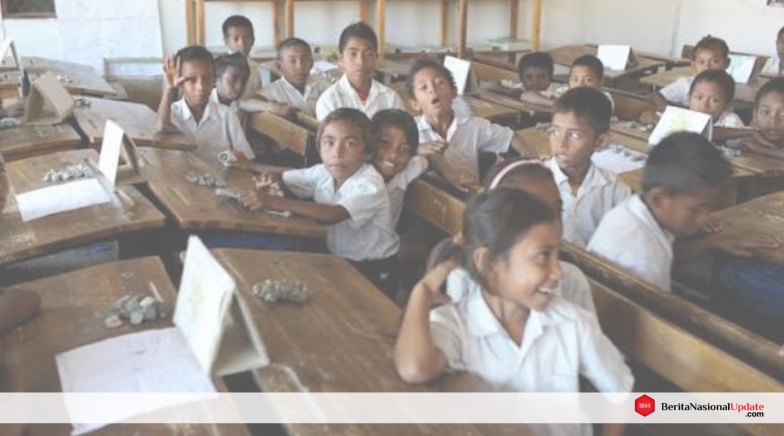
In public policy discourse, universal access and quality are not a trade-off, but rather an evolutionary stage. According to Statistics Indonesia (BPS) data, the Gross Enrollment Rate (GER) for secondary education in Indonesia has not yet reached 100%, meaning many children from the lowest decile (the poorest group) are pushed out of the education system simply due to cost constraints.
If we look at the development history of advanced nations (such as South Korea or Finland), they did not wait for their education systems to be perfect before making schools free. They ensured access first, then incrementally improved quality (curriculum and pedagogy). Allowing millions of children to drop out of school while waiting for "evenly distributed quality" will generate much higher social costs in the future in the form of unemployment, crime, and structural poverty. Quality is a process, but access is a fundamental right that cannot be delayed.
3. Media Highlight: Execution Capacity and Decentralization Tangles
The decentralized system makes it difficult for the central government to control implementation at the regional level, leading to assumptions that the free schooling policy will be prone to corruption, mis-targeting, and failure at the execution level.
It is true that governance at the regional level varies. However, using bureaucratic weaknesses as an excuse to cancel progressive policies is a logical fallacy. On the contrary, a national free schooling policy can serve as a momentum for institutional forcing---compelling the synchronization of minimum service standards (SPM) between the central and regional governments.
Indonesia's success in managing the education endowment fund (LPDP), which now reaches more than Rp 139 trillion, proves that the state possesses the instruments and capacity to manage education funds transparently and accountably. The same approach can be replicated to ensure the transfer of free schooling funds to the regions operates on the principles of performance-based budgeting.
Share News
For Add Product Review,You Need To Login First